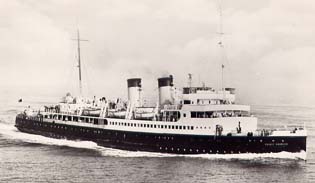
Prince Charles

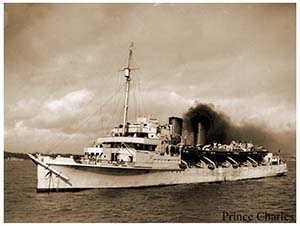
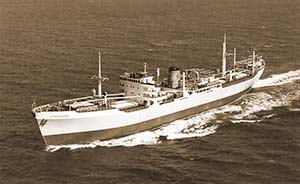
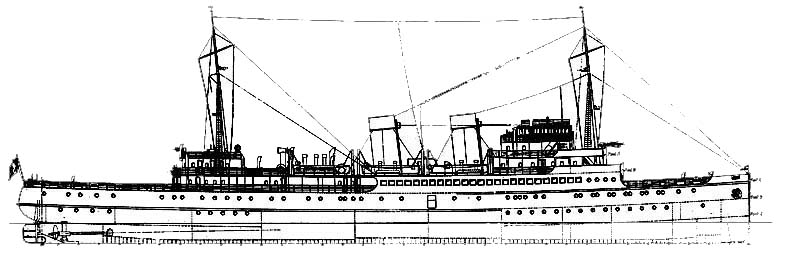
Als derde schip van de prinsenvloot werd de Prince Charles samen met de Prinses Josephine Charlotte bij Cockerill besteld. De bestelling werd in juni 1929 geplaatst. De totale lengte van de Prince Charles was 109.60 meter en 14.81 m breed. De diepgang was 3.05 m. Het schip had een waterverplaatsing van 2559 ton en diende een snelheid te halen van minstens 23.5 knopen. Bij de planning had men reeds de ruimten voorzien om 150 ton kolen en ook 200 ton mazout te kunnen inschepen.

De Prince Charles werd als eerste van de twee bestelde eenheden op 12 april 1930 in de namiddag gelanceerd in aanwezigheid van Prins Karel en tal van genodigden.  Het was Francine Greiner de dochter van de dhr. Greiner, bestuurder van Cockerill die als meter van het schip op aangeven van Prins Karel het koord met het daarvoor speciaal gegraveerde bijltje mocht doorhakken. Nadat het touwtje was doorgehakt gleed het schip feestelijk bevlagd gracieus van de helling en kliefde door het water van het dok terwijl de aanwezig zusterschepen Prinses Astrid en Prince Léopold de scheepsfluiten hartig lieten weerklinken. Na de plechtigheid begaven de genodigden zich aan boord van de zusterschepen voor een bezoek, een bijhorende receptie en toespraken.

Zeven maanden later kon de Prince Charles na afwerking in dienst worden genomen. In de laatste week van oktober deed de Prince Charles de nodig proeven en vertrok op 31 oktober om 10u30 uit Hoboken naar Oostende om daar omstreeks 17u00 aan te komen. Commandant Degraeve en luitenanten Georges Timmermans en Roedts konden zich voorbereiden voor de reguliere afvaart tussen Oostende en Dover. Er was nog voor de eerste officiële afvaart naar Dover een trip gepland met de Minister Lippens, Prins Karel en een aantal genodigden. Omdat tijdens de nacht een zware storm was opgestoken werd deze geannuleerd. De maiden trip had plaats op 11 november 1930 en vertrok te Oostende even voor 11u00 met 65 reizigers en een aantal genodigden. Het weer was nogal woelig maar eenmaal in zee gleed de Prince Charles statig door de golven. Het was 14u15 wanneer het schip in Dover aankwam na een reis van 3 uur en twintig minuten. Na aankomst begaven zich enkele prominenten aan boord om door dhr. Devos en andere overheden te worden ontvangen. Na de officiële plechtigheid kon de Prince Charles opnieuw vertrekken naar Oostende en verliet de kaai van Dover om 16u00 met 72 passagiers. Na een woelige reis van 3u en 17 minuten kwam het schip voor de haven van Oostende om wat later af te meren. Ze was gereed voor de reguliere dienst.

Op 8 december 1930 had de Prince Charles al te kampen met averij en kon zijn geplande reis om 10u30 niet vertrekken. De reizigers waren al aan boord ingescheept en moesten terug ontscheept worden om op de Ville de Liège te worden ingescheept die op de middag kon vetrekken. Het was commandant Degraeve die ook in die week een record op zijn naam zette. Hij maakte de reis Dover-Oostende in 2 uur en 27 minuten ondanks het mistig weer.

In mei 1931 kreeg cdt Degraeve te maken met een drama. Een Italiaanse oorlogsinvalide, verlamd aan een arm en een been, werd te Dover geweigerd wegens gebrek aan bestaansmiddelen en teruggezonden. Hij wou nochtans zijn vrouw in Londen gaan bezoeken. De man werd terug op de Prince Charles ingescheept en was totaal van streek. Na vertrek deelde hij alles wat hij bij zich had aan de matrozen uit en sprong ter hoogte van de Sandetti overboord. Onmiddellijk gaf luitenant Timmermans opdracht een reddingssloep uit te zetten en een reddingsgordel uit te gooien naar de ongelukkige man. Maar die weigerde. Een tweede keer had meer succes en de man kon in de reddingssloep worden gehesen. Hij had ondertussen al het bewustzijn verloren. In Oostende werd hij naar het hospitaal gebracht en alle voorwerpen aan de havenmeester terug gegeven. Zijn toestand was echter niet kritisch en na genezing zou men hem aan de Italiaanse overheid te Brussel worden overgemaakt.

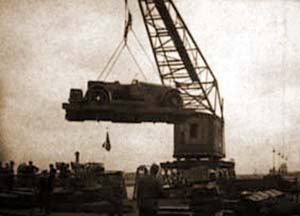
Regelmatig werden op het achterdek voertuigen geladen. Deze werden met de kaaikranen aan boord gehesen. Deze kraan werd hiervoor in 1926 op de kaai geplaatst.
Begin april van dat jaar mocht de Prince Charles een excursie naar Londen verzorgen met een groep van de  Belgische Maritieme Liga. Ze waren met 228 die voor de eerste maal voor anker gingen voor de Tower of London tot bewondering van velen voor dit mooie schip.  De reis was zo goed meegevallen dat de deelnemers een petitie opstelden om het volgende jaar in de zomer een excursie naar Leith voor enkele dagen te organiseren. 

In juni 1932 vroeg men in het parlement aan de Minister hoeveel die maalboot nu heeft gekost aan de schatkist.  Ze kregen voor antwoord dat de Prince Charles 41 369 604 Bfr. heeft gekost. Op 18 juli werd met de Prince Charles een speciale reis naar Dover ingericht om Amerikaanse schoonheden in Dover te gaan halen voor Oostende. Het vertrek was voorzien om 08u30 en er waren speciale evenementen aan boord. Voor de heen en terugreis betaald men 50 Bfr. en voor de lunch 27 Bfr. Aan boord was een Russisch jazz orkest voorzien voor de overtocht. Commandant Degraeve was om 16u00 terug in Oostende met zo'n 500 reizigers.

In oktober 32 kwam de Prince Charles in Dover in aanvaring met een cargo, de Peter Hawksfield van 959 ton. Deze laatste was afkomstig van Goole en ging aanleggen in de buitenhaven terwijl de Prince Charles de haven binnen voer. De Peter Hawksfield geladen met kolen werd aan de boeg beschadigd en moest worden van zijn lading gelost en verder onderzocht. De Prince Charles liep wat beschadigingen op aan het berghout en twee patrijspoorten. De Prince Charles had 52 reizigers aan boord en kon verder de diensten  verzekeren.  

Op 2 juli 1933 richtte het reisagentschap Wirtz naar aanleiding van de zeewijding te Oostende en de daaraan gepaarde feestelijkheden een speciale reis in met de Prince Charles naar Antwerpen. De gegadigden konden ’s morgens voor de som van 45 Bfr. in Antwerpen met de trein vertrekken naar Oostende om op de feesten aanwezig te zijn en om 18u00 met de Prince Charles terugkeren naar Antwerpen waar ze omstreeks 23u00 aan de hangar 21 toekwamen. Zo’n 1000 gegadigden genoten van een fantastische dag.

Op maandag 28 augustus 1933 en onderweg naar Dover kwam de Prince Charles plots op de middag aan de Ruytingen een scheepswrak tegen dat uitgebrand was. Het houten stoomschip was volledig vernield door brand en nog smeulend in zwarte rook.  De commandant gaf opdracht om een reddingssloep uit te zetten en in de omgeving te gaan zoeken naar overlevenden of mogelijk lichamen. Dit leverde echter niets op en de sloep werd in de davit naast het schip gehangen voor eventuele snelle interventie. Toen de reis naar Dover werd verder gezet zag men zo’n drie mijl later een klein bootje waarin vier mannen zaten die als noodsignalen met een laken zwaaiden. In het bootje zaten de mannen van het Franse vissersschip Raymond Emelie Annette uit Calais. Het schip was de donderdag uitgevaren om te vissen maar de maandagmorgen om 05u30 ontstond brand aan boord en de kapitein vreesde dat de motor ging exploderen. Hij gaf opdracht om het kleine reddingsbootje uit te zetten om afstand van het brandende vissersschip te nemen. Ook besliste hij een kleine voorraad proviand mee te nemen. Nog maar pas op een kleine afstand van het schip gekomen explodeerde zoals verwacht de motor en begon het vaartuig te zinken. Ze hadden alle moeite gehad om naar andere schepen in de omgeving signalen te sturen en zo om opgemerkt te worden. Ze waren uiteraard euforisch wanneer de Prince Charles hen opmerkte op de middag en uit hun netelige situatie kon halen. Ze werden aan boord verzorgd en de reizigers hadden nog een geldinzameling gedaan voor de geredde slachtoffers. In Dover werden de mannen aan het Frans consulaat overgedragen die hen dezelfde avond met een Franse ferry terug naar Calais kon brengen.

Op 26 oktober 1933 heerste een hevige storm op de kust toen de Prince Charles uit Dover rond 07u15 na een slechte overtocht voor Oostende kwam met commandant Van Hulle. Wanneer hij de haven binnen vaarde, plots halverwege door een windvlaag werd gegrepen en dwars in de haven ging. De Prince Charles botste daarbij tegen het ooster- en westerstaketsel. Het schip wierp het anker maar het duurde wel een kwartier vooraleer de commandant terug controle over het vaartuig kreeg met de hulp van sleepboot 5 en zodoende verder kon invaren. Doch wat verder voor de kaaimuur werd het schip opnieuw dwars geduwd waarbij het de kaai raakte. De maalboot had wel wat schade aan het roer en huid. Aan de staketsels werd naar schatting voor zo’n 200 000 Bfr. schade aangebracht. Gelukkig waren er niet zo veel reizigers aan boord. Het hevige stormweer had tevens heel wat schade over de ganse kustlijn aangericht.

In november kreeg de Prince Charles aan boord in Dover bezoek van afgevaardigden van de Britse Post Office. Op de Belgische maalboot hadden de reizigers in die tijd al de mogelijkheid te telefoneren met gelijk welke abonnee in België en zelfs de buurlanden. De Britten kwamen een bezoekje brengen met het oog om net zoals in Oostende ook een zendstation in Dover te plaatsen. Wat uiteraard de dienstverlening zou ten goede komen.
Half december van datzelfde jaar had commandant Degraeve tijdens zwaar weer en bij het invaren te Dover een onverlichte boei aangevaren. De aanvaring had echter nogal wat schade aan het schroef aangericht dat de Prince Charles was genoodzaakt zo snel mogelijk naar het droogdok moest voor herstellingen.

Op 15 november 1934 kwam de Prince Charles in aanvaring met de O.113 die de vissershaven uit voer. Het vissersschip werd beschadigd en moest terug keren. De Prince Charles kon de reis verder zetten. Achteraf gaf de schipper Vercruysse van de O.113 toe de fout te hebben gemaakt om geen voorrang te geven.

In februari 1935 publiceert men in de krant De Zeewacht een interessant artikel over het verbruik van brandstoffen op de maalboten. Rekening houden dat op dat moment enkel de Prince Baudouin is uitgerust met gasolie dieselmotoren stellen we vast dat de overgang van kolen naar mazout dat jaar bijna is afgerond. Zo verbruikte de Ville de Liège voor één overvaart 8275 Bfr. kolen. De Prinses Marie-José deed dat met 8720 Bfr. mazout en de prinsenboten voor 8190 Bfr. Uiteraard halveerde de Prince Baudouin de kost met 4830 Bfr. per enkel reis. Zoals men weet was prinsenvloot gebouwd met de optie om zowel kolen als mazout te stoken voor de stoomturbines. In eerste instantie kwamen die schepen in dienst en werden met kolen gestookt. De lobby van kolenleveranciers had daarvoor bij de Minister aangedrongen om de economische schade te beperken. De Minister had daarin toegegeven. De Prince Baudouin had echter een nieuw tijdperk ingezet.

Op 10 december 1935 heerste terug een hevige N-O storm in Dover waardoor de havens van Dover en Folkestone die dag voor enige tijd gesloten werden. Drie schepen van de Britse Southern Railway lagen in Boulogne en Calais op beter weer te wachten. Op 11 dec vertrok de Prince Charles om 15u15 uit Oostende en kwam rond 19u00 voor Dover. Na enkele vruchteloze pogingen om binnen te varen zette de kapitein koers naar Folkestone. Daar bleken ook alle pogingen binnen te gaan tevergeefs. Er zat niets anders op voor de commandant om daar in de omgeving voor anker te gaan en zodoende de 154 reizigers aan boord om de nacht door te brengen in helse weersomstandigheden. De woensdagmorgen om 07u00 lukte het de Prince Charles om de haven van Newhaven binnen te gaan tot grote opluchting van de reizigers.

Op maandag 27 januari 1936 maakte de Prince Charles deel uit van een speciale reis naar Dover met de Koning Léopold, de Koninklijke Prinsen van Luxemburg en afgevaardigden van de regering voor de begrafenis van Koning George V van Engeland.  De woensdag 29 is de Koning met de Prince Charles, begeleid door twee Engelse eenheden teruggekeerd naar België. 

Half mei 1937 organiseerde het reisbureau Wirtz een speciale reis naar aanleiding van de kroning van Koning George VI op 12 mei. De reis startte de dinsdag avond in Antwerpen met de trein van 19u00 naar Oostende. Daar werden ze ingescheept op de Prince Charles voor Dover en na aankomst met de trein naar Londen gebracht. Daar kwamen ze om 03u45 in de morgen aan om dan nog heel wat uren te wachten in het Hyde Park om de prachtige defilé te kunnen aanschouwen. Om 18u00 vertrok de groep terug uit Londen naar Dover en met de maalboot verder naar Oostende. Vermoeid kwam de partij om 02u30 terug aan in Antwerpen. Zo’n 700 mensen waren van de partij voor deze unieke aangelegenheid die hen werd aangeboden.
Regelmatig moest een maalboot naar Antwerpen voor onderhoud, herstelling of droogdok. Voor de tocht naar Antwerpen op 20 juni 1938 mochten een groep schoolkinderen mee van Oostende naar Antwerpen vooraleer de Prince Charles werd drooggelegd.

Op 20 oktober 1938 bracht de Prince Charles de Koning en Prinses Marie-José incognito naar Dover en voor een bezoek te Londen.

Op 18 december 1938 had de Prince Charles te kampen met pech in de gure heersende weersomstandigheden. Die zondag was de Prince Charles normaal afgevaren maar kreeg in Dover een kabel in het schroef die het schip uit dienst haalde. Het schip diende in Dover te blijven en niets kon worden ondernomen om aan het euvel te verhelpen gezien de weeromstandigheden. Men slaagde er pas in de maandag nacht op dinsdag om de kabel te verwijderen. Met veel moeite geraakte de Prince Charles terug in Oostende en werd pas de donderdag morgen naar Antwerpen gesleept voor de droogdok. De daarop volgende zaterdag (24) kon de Prince Charles de droogdok verlaten en onmiddellijk naar Oostende terug keren om de dienst te hernemen.

WW2

Vanaf 29 november 1939 werd op Folkestone gevaren. Op vrijdag 22 december wilde de Prince Charles Folkestone verlaten maar diende terug te keren wegens de dichte mist en voor anker gaan. De situatie bleef een hele tijd ongunstig voor de commandant Van Gool zodoende kon het schip pas de maandag om 08u00 terug vertrekken naar Oostende met 35 reizigers en met aankomst om 14u00.

De Prince Charles kwam op 6 januari 1940 in aanvaring met een Frans vaartuig waarbij het roer werd beschadigd en buiten dienst viel. De herstelling was op 31 januari uitgevoerd en het schip kon terug in de dienst ingezet tot 3 mei.
Op 17  mei 1940 kon de Prince Charles uit Oostende samen met enkele andere maalboten vluchten naar Southampton. Er werd beslist om het schip in te zetten voor diverse taken en op 24 september naar Devonport gestuurd voor conversie. De aanpassing hield in het schip aan te passen voor acht landingsvaartuigen.
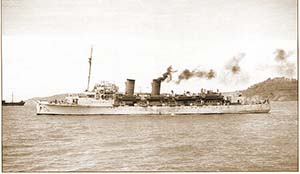
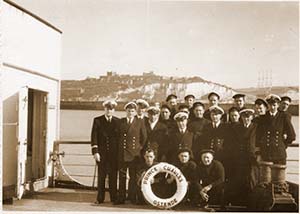
Omdat er dringend nood was om de vluchtelingen uit Frankrijk te evacueren verzorgde de Prince Charles allereerst van 30.5.40 tot 21.9.40 voor reizigersvervoer voor rekening van het Ministerie van Oorlogsvervoer en werd op 30 mei naar Caen gestuurd. Ze was in Brest, St Malo en Cherbourg om op 16 juni vertrekkend uit St Malo om als laatste schip naar Southampton te varen. Daar werd overgedragen aan de Royal Navy en vanaf december 1940 op de werf van Silley Cox & Co omgevormd tot een small landingsvaartuig of LSI. Er werd bewapening geplaatst om later deel te nemen aan diverse operaties met als basis lnveraray. Schepen zoals de Prince Charles waren als turbine en dieselschepen als landingseenheid heel goed geschikt door hun snelheid en beperkte diepgang. Door de beperkte diepgang kon men met het schip dicht bij de kust komen om de landingsvaartuigen aan land te sturen. Met hun hoge snelheid was men na het landen van troepen ook weer snel uit de voeten van de kust weg. Op 6 maart 1941 werd de Prince Charles gedoopt als HMS Prince Charles  met als basis lnveraray in Schotland.  
Bij de proeven was met niet tevreden over het resultaat en het schip werd in Davenport beschadigd tijdens een luchtbombardement in de nacht van 29 en 30 april 41. Een bom op bakboord midden veroorzaakte schade en vijf gewonden. Hierdoor kon ze pas op 23 juni vertrekken en werd bij vertrek opnieuw gebombardeerd. Deze keer echter zonder schade op te lopen.

Vanaf 8 augustus werden oefeningen gehouden voor een eventuele invasie op de kanaal eilanden en Gibraltar. Op 18 augustus kon ze deelnemen aan de operatie Jubilee en de dag nadien Canadese troepen voor de raid in Dieppe landen waar ze twee landingsvaartuigen verloor. In December 41 en Januari '42 nam zij deel aan drie raids op de Noorse kust. Ditmaal een gecombineerde opdracht zoals de ombouw was bedoeld. De Prince Charles was terug op de Clyde op 7 januari 42 en in maart werd het schip onder handen genomen voor onderhoud en herstellingen.

De Prince Charles vertrok op 18 juni 1943 uit Falmouth en diende voor Gibraltar te bunkeren om dan op  26 juni aan te komen in de Noord Afrikaanse haven Oran.  Ze vertrok uit Bizerta op 7 juli met US Rangers voor een aanval drie dagen later op de Siciliaanse kust. Op 16 augustus opnieuw met commando’s van de Royal Marines voor een raid NO de Siciliaans kust. Op 9 september mocht ze US Rangers landen aan de Italiaanse kust in Salermo.  Op 24 september bracht ze troepen naar Italië waarna ze een klein onderhoud had in Malta en klaargemaakt voor terugkeer naar Engeland. Ze vertrok dan op 3 november uit Gibraltar en ging naar Tilbury voor herstellingen. Waar een grondig herstel van de gemetselde constructies van de boilers plaats had.
Zij keerde terug naar de Britse wateren in Oktober 1943 en nam deel aan de invasie van Normandië. In Augustus 1944 werd zij door een torpedo beschadigd enin herstelling gezonden naar Penarth en terzelfder tijd omgebouwd tot passagiersvaartuig om overgegeven te worden aan het Ministerie van Oorlogsvervoer op 21.12.44. Door het Ministry of War werd zij vanaf juni 45 werd aangewend voor het vervoer van troepen tussen Oostende en Dover tot zij teruggegeven werd aan de Belgische Marine te Antwerpen op 15.6.46. Na herstel en ombouw van de oorlogsactiviteit op de werf van Cockerill om haar taak van regulier passagiersvervoer terug op te nemen kon de Prince Charles terug in dienst op 11 november 1946.

Enkele weken later op zondag 15 december raakte de Prince Charles bij afvaren voor het Zeestation een oorlogswrak en maakte hierbij schade. Het schip moest terug aanleggen omdat het water maakte. De reizigers werden overgeladen naar de Londen-Istanbul. Met uiteraard nogal vertraging. Men verweet de overheidsadministraties omdat het te lang duurde na de aanbesteding voor dit wrak werd opgeruimd.

Op 21 juni 1947 werd een reiziger, dhr Sidney Robertson van 70 jaar en bestuurder van een fabriek op 18 mijl van Dover een hartaderbreuk en overleed aan boord. Bij aankomst werd het stoffelijk overschot in afwachting naar het dodenhuis gebracht.
Stilaan hernam het leven na de vreselijke oorlog. Ook dhr. Wirtz was terug van de partij en maakte van de gelegenheid gebruik wanneer de Prince Charles in Antwerpen voor Pasen 1947 en groot onderhoud heeft gehad om de terugreis naar Oostende met reizigers te organiseren. Reizigers dienden hun eigen mondvoorraad mee te nemen omdat de restauratie nog niet open was. Wel was er drank beschikbaar. Men kon aan de reis deelnemen voor de som van 100 Fr per volwassene en 60 Fr voor kinderen onder de 14 jaar.  Nog in de aprilmaand op de 15e verraste commandant Aspeslagh op de reis met de Prince Charles een trouwe reiziger dhr. Roger Sander. Op die dag wilde men de 20 000ste reiziger sinds januari in de bloemetjes zetten. Als trouwe reiziger kreeg Roger een mooi portefeuille.

In 1948 werd de Prince Charles in Hoboken helemaal opgeknapt en heringericht. De populariteit van de kruisvaarten Antwerpen-Oostende nam steeds toe en de kranten het Handelsblad en de Metropool organiseerden in het seizoen telkens reisjes naar de kust en terug met de Antwerpenaren. 

In april 1950 kreeg de Prince Charles met commandant Aspeslagh te maken met een stevige grondzee. Op 10 april was de Prince Charles uit Dover vertrokken met nogal woelige zee. De reis legde aan om zwaar te worden en commandant Aspeslagh gaf orders om alle passagiers en reisgoed binnen te houden. Uiteraard waren er enkelen die deze richtlijnen negeerden. Wanneer plots een grondzee de Prince Charles beet nam, de voorsteven onder water stak en zo het schip en de 400 reizigers door elkaar schudde. Ook de geladen auto’s werden beschadigd. Een paar reizigers werden gewond maar uiteindelijk viel dit nog mee. Eén Engelse reiziger moest bij aankomst naar de kliniek gebracht. Behalve het bang moment kon de bemanning tamelijk snel de reizigers kalmeren en gerust stellen. Dat het geen aangename reis was hoeft niet gezegd. De meeste reizigers waren de ganse reis erg zeeziek. Maar vooral was men het voorval in 1920 waarbij de Pieter de Coninck door een grondzee werd getroffen niet vergeten. De wilde zee had bij de Pieter de Coninck wel enkele reizigers van het dek meegesleurd in zee. Commandant Aspeslagh was normaal commandant op de Prince Philippe maar had voor die reis een collega vervangen. Alspeslagh was al 20 jaar bevelhebber maar gaf toe dat hij ditmaal de kwaadste momenten van zijn loopbaan had meegemaakt.

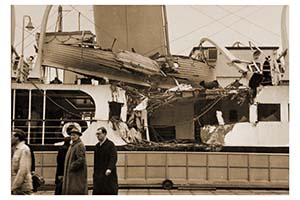
Op 19 maart 1953 kwam de Prince Charles omstreeks 11u00 en op zo’n 15 mijl van Duinkerke aan de Westhinder tijdens de dichte mist in aanvaring met een Engels cargoschip de “Llantrisant”. Dit vaartuig van 6140 ton was onderweg uit Melbourne naar Antwerpen. De Prince Charles had omstreeks 09u45 Oostende verlaten en kreeg onderweg te maken met dichte mist. Wanneer men plots de signalen van een ander schip meende te horen gaf commandant Tanghe het bevel om het schip stil te leggen teneinde de positie van het ander schip te kunnen bepalen. Beide schepen lieten voluit hun signalen horen maar plots doemde uit de mist het ander schip op en ramde de Prince Charles haaks midscheeps. De reizigers hoorden gekraak en voelden een hevige schok. De bemanning begon onmiddellijk reddingsvesten uit te delen en de reddingsboten klaar te maken. De Prince Charles werd zwaar beschadigd. Gelukkig deden de waterdichte deuren van de compartimentering hun bedoeld werk zodat het ruim niet onder water kon lopen. Op het moment van de aanvaring was er slechts één reiziger aan dek en dit nog ter hoogte van de aanvaring. Gelukkig zag de reiziger het aankomen en kon deze zich snel uit de voeten maken. Er ontstond echter geen zware paniek aan boord. De aanvaring richtte schade aan in de stookruimte en stelden drie van de zes stookketels buiten dienst. Na evaluatie van de toestand seinde de Prince Charles dat ze geen hulp nodig had en op eigen kracht op de stuurboord machines terug naar Oostende kon varen. Bij het invaren en sterke stroming ramde de Prince Charles nog het Oosterstaketsel en beschadigde een reling over een afstand van zes meter. Omstreeks 15u10 kwam ze aan in Oostende waar men de lading post, wagens en de 113 reizigers kon overladen op de Prince Philippe die eigenlijk om 14u30 moest vertrekken maar werd opgehouden om de mensen van de Prince Charles te kunnen meenemen. De Prince Philippe vertrok dan om 16u00 met anderhalf uur vertraging.
De boeg van het Britse schip had midscheeps een grote driehoekige scheur van zo’ drie meter groot aangebracht bij de aanvaring. Het dek en een reddingsboot werd beschadigd en in de stookkamer kwam er water binnen. Door gebruik van de pompen konden drie stookketels worden gevrijwaard.
Men schatte dat de Prince Charles voor zo’n drie weken uit dienst moest voor herstelling. De Minister Seghers en zijn kabinetsattaché Frans Vanvaerenbergh kwamen de donderdag 26 maart de schade bekijken en de commandant en zijn bemanning danken voor hun moedig en kordaat optreden tijdens deze noodsituatie waarbij niemand was gekwetst of zelfs erger. Een zware ramp kon worden vermeden. Nog diezelfde dag vertrok de Prince Charles naar Antwerpen voor de nodige herstellingen.
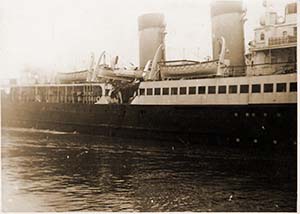
Stilaan werd de Prince Charles een veteraan in de vloot als enige overblijvende stoomschip van de Prinsenvloot uit 1930. De dienst had ondertussen een aantal beter schepen zoals de Koning Albert, Prince Philippe en uiteraard de Car Ferry. Tevens lagen er nog enkele nieuwe schepen in de planning en op de tekentafel. Om die reden werd de Prince Charles in 1958 uit dienst gehaald en bleef een tijdje werkloos.

Op 28 oktober 1960 werd om 14u00 een openbare verkoop georganiseerd in café Central op het Wapenplein te Oostende. Het schip werd te koop aangeboden mede met een lot reservemateriaal. Op de veiling waren 13 gegadigden. De firma Bulens uit Hoboken kocht het schip voor 5 111 100 Bfr. Het reservemateriaal ging naar een Brugs sloopbedrijf voor 340 000 Bfr.
Half december 1960 kwam de Prince Charles te Willebroek aan voor afbraak.

Dit was het einde van de Prinsenvloot.
As the third ship for the planned Prince Fleet the Prince Charles was ordered at Cockerill yard together with its sistership the Prinses Joséphine Charlotte. The order was placed in June 1929. The total length of the Prince Charles was 109.60 meter and 14.81 meter width. Draft was 3.05 meter. The vessel had a water displacement of 2559 ton and had perform a minimum speed of 23.5 knots. During the creation of the plans it was already foreseen to have a bunkering possibillty for 150 tons of coal and also 200 tons of diesel.

The Prince Charles was the first to be launched in the afternoon on the 12th April 1930 and in the presence of the Prins Karel (real Prince Charles) and a number of invitees. It was Francine Greiner, the daughter from Cockerill General Manager Mr. Greiner, which had the honor to cut the rope with the special created and engraved axe when the Prince Kartel signaled her to go ahead. After the rope was cut the vessel glided fully flagged and gracious down the slide into the dock while the sister ships Prinses Astrid and Prince Léopold loudly sounded their ships whistle. After the ceremony  all invited went on board of the Prinses Astrid and Prince Léopold for a reception and the necessary speeches.

Seven months later the Prince Charles could start service after the vessel was finished by Cockerill and had performed the necessary trials and left the yard in Hoboken on the 31st October at 10.30 hrs. for Ostend to arrive at 17.00 hrs. Captain Degraeve and lieutenants Georges Timmerman and Roedt could prepare for the regular crossing duties between Ostend and Dover. There was a first official trip to Dover planned with the Minister Lippens, Prince Karel and a number of invitees. As the day before a heavy storm developed the trip was cancelled.

The maiden trip had place on the 11th November 1930 and the Prince Charles left Ostend just before 11.00 hrs. with 65 passengers and a number of invited personalities. The weather was a bit stormy but the Prince Charles glided graceful  through the waves and arrived at 14.15 hrs. at Dover after a crossing of 3 hours and twenty minutes. After arrival some VIP’s came on board to be received by Mr. Devos from the Ostend-Dover line and governmental representees. After the ceremony the Prince Charles left for Ostend and left Dover Quay at 16.00 hrs. with 72 passengers. The crossing was considerable bumpy but after 3 hours and 17 minutes the Prince Charles arrived at Ostend to dock. She was ready for her intended task.

On the 8th December 1930 the Prince Charles was confronted with a breakdown and could not leave for Dover. Passengers were already embarked and had to be disembarked and loaded on the Ville de Liége which could only leave Ostend in the afternoon. That same week captain Degraeve could set the record on his name by performing the crossing to Dover with the Prince Charles in 2 hours and 27 minutes. Despite the light foggy weather.

In May 1931 captain Degraeve was confronted with a real drama. An Italian paralyzed war invalid at one arm and leg was refused at Dover due to lack of means to pay and was send back by the authorities. All do he wanted to visit his wife in London. The poor man re-embarked on the Prince Charles and was totally stressed. After departure he gave everything he had of personal belongings to the sailors on board and jumped overboard near the Sandetti bank.  Lieutenant Timmermans gave to order to set out an life boat immediately and lifebuoy but the man refused to take it. A second trial a sailor managed to take the poor man in a life boat. Meanwhile he came unconscious. In Ostend he was brought to hospital and all his belongings were given to the harbormaster. His condition was not critical and after he healed he could be brought over to the Italian authorities in Brussels.

Begin April that year the Prince Charles could perform a trip to London with the Belgian Maritime League. With 228 pax she could go at anchor in front of the Tower of London to the admiration of many for the beautiful ship. The trip was so well organized and appreciated the passengers had started a petition to organize the next year a new excursion to Leith for a few days.

In Juni 1932 the Minister in Parliament was asked how much the Prince Charles now really had costed to the Belgian tax payer. He answered the total was 41 369 604 Bfr. And on the 18 July the Prince Charles was asked to fetch an number of American beauties at Dover with destination Ostend. The departure was at 08.30 hrs. and special events were organized on board. For the trip they had to pay 50 Bfr and 27 Bfr. for lunch. There was a Russian orchestra on board. Captain Degraeve was back in Ostend at 16.00 hrs. with 500 passengers.

In October 1932 the Prince Charles had a collision with an cargo vessel, the Peter Hawksfield (959 tons). The cargo vessel was coming from Gool and was intended to dock at the exterior port while the Prince Charles was entering the port. The Peter Hawksfield loaded with coal was damaged at the bow and had to be unloaded to investigate the possible damage. The Prince Charles had some damage to the fender wale and two portholes. The Prince Charles had 52 passengers on board and could proceed his service.

On the 2nd July 1933 the travel agency Wirtz organized on the day festivities were organized to bless the sea and fishing vessels at Ostend, a trip with the Prince Charles from Antwerp to Ostend. Leaving Antwerp in the morning and turning back around 18.00 hrs. to arrive Antwerp around 23.00 hrs. near hangar 21. About one thousand passengers could enjoy a wonderful day at Ostend for the price of 45 Bfr.

On Monday 28 August 1933 and being underway from Dover to Ostend, the Prince Charles suddenly noticed around noon a burned shipwreck that was still smoking black smoke. The captain gave the order to release a lifeboat and search the area for survivors or even worse possible bodies. This without any result and the lifeboat was hanged again in the davit but standby in case needed for fast intervention. When the vessel proceeded the voyage to Dover again they notice about three miles further a small vessel with four people in it waving with a white sheet as destress signals. In the little dinky there were four men, crew from the French fishing vessel Raymond Emelie Annette from Calais. The fishing vessel left Calais on Thursday but was confronted the Monday morning with a fire on board. The captain feared the engine was going to explode an gave the order to abandon ship with their lifeboat in order to take a safe distance from the burning vessel. He also decide to take a small amount of food with them. And he was wright, after they have taken the lifeboat and hurrying away from the burning vessel, the engine exploded and the vessel started to sink. They had a lot of difficulties to try and signal any vessel in the area for help and to be noticed. They were really euphoric when the Prince Charles noticed them in the afternoon and could get them out of their problematic situation. They were taken on board and being taken care of. Even the passengers on board the Prince Charles had organized a solidarity collection amongst them and gave a sum of money to the victims. Once arrived in Dover the French fishermen were brought to the French consulate which could send them the same evening with the ferry back to Calais and their families.

On the 26th October 1933 there was a heavy storm on the channel when the Prince Charles came from Dover and arrive near Ostende around 07.15 hrs. with captain Van Hulle. Entering the port between the pierheads he suddenly got a heavy gust of wind on the side and was turned out of control and hit the western and eastern pier. The captain could lower the anchor but it took about fifteen minutes before captain Van Hulle got back control of the Prince Charles with the help of the tugboat nr. 5 and managed to proceed his maneuver to enter port. But a bit further the ship was blown again out of direction and hit the quay. The Prince Charles had some damage to the rudder and hull. The piers were damaged and estimated for a sum of 200 000 Bfr. Luckily there were not to many passengers on board. The severe weather had also created a lot of damage along the whole coast line that night.

In November the Prince Charles got a visit on board in Dover from some representatives from the British Post Office. The Belgian mail steamers had the facility to telephone from the vessel to any correspondent in Belgium and even neighbor countries on board. The Brits came on board to visit the installation and  see if they could also organize and create a transmitting station in Dover similar to the one in Ostend. Which indeed could improve services to the ferry passengers in general.

Half December that year captain Degraeve was entering Dover and hit a buoy which was not lighted. Due to the collision the propeller was seriously damaged and it was necessary for the Prince Charles to be dry docked as soon as possible for repairs.
On the 15th November 1934 the Prince Charles had a collision with the Ostend fishing vessel the 0.113 which was going out of the port. The fishing vessel was considerable damaged and had to return to port. The Prince Charles could proceed his service. The captain from the fishing vessel 0.113, cpt. Vercruysse admitted to have made a mistake and did not give priority to the Belgian mail steamer as in maritime regulations.

In February 1935 we found an interesting article in the local paper called “De Zeewacht” concerning the fuel consumption on the Belgian mail boats. Considering at that time only the Prince Baudouin was built to burn gasoil we could read the transition to gasoil on the Belgian ferries from coal to gasoil was almost finished. Figures showed the Ville de Liége used for its trip both ways 8275 Bfr. coal. The Prinses Marie José needed 8720 Bfr. diesel and the Prince Fleet 8190 Bfr. The Prince Baudouin was the most economic vessel using 4830 Bfr. As mentioned before it was already planned for the Prince Fleet on the drawing table to provide bunkering area’s on board for coal and also gasoil. The steamers were thus at first driven by coal and later transferred to be heated by gasoil. The reason for that was that at the start in 1930 the lobby from coal merchants complained to the Minister about the economic damaged the decision was about to make. Therefore the Minister had listen to reason and gave time for the transition. But the Prince Baudouin and its new technology had entered a new era. 

There was a severe storm from the NE on the 10th December 1935 in Dover which forced the ports of Dover and Folkestone to close. Three ships from Southern Railways were in Boulogne and Calais waiting for better conditions to depart. On the 11th the Prince Charles left Ostend at 15.15 hrs. and arrived around 19.00 hrs. at Dover. After a few unsuccessful attempts to enter the captain changed destination to Folkestone. Arriving there also all attempts to enter port were unsuccessful. The captain had no other choice than find a spot in the area to anchor and wait. 154 passengers had to stay on board for the night in very severe weather. The next morning on Wednesday the Prince Charles succeeded to enter at Newhaven. Must we say to the relieve of the passengers after such an experience.

On Monday 27 January 1936 the Prince Charles participated to a special mission to bring the King Léopold, the Royal Princes and representatives from the government to Dover for the funeral of deceased British King George V. After the ceremony the party returned with the Prince Charles to Belgium and Ostend the next Wednesday accompanied by two British vessels.

The 12th  May 1937 the travel agent Wirtz organized a special trip to Dover again with the Prince Charles for the coronation of King George VI. The trip started in Antwerp on the Tuesday evening with a train at 19.00 hrs. to Ostend. All travelers from the group were embarked on the Prince Charles to depart for Dover. In Dover transferred on a train to London were they arrived early morning at  03.45 hrs. Arrived in Hyde Parc to wait until morning before witnessing the superb festivities and ceremony organized for the coronation. At 18.00 hrs. the group left London for Dover and embarked again for Ostend. The party arrived back in Antwerp around 02.30 hrs. in the morning very tired. But around 700 people had experienced a once in a lifetime moment of a coronation on British soil.

Mail boats had to go to Antwerp on a regular basis for repairs or maintenance. When the Prince Charles needed to go to Antwerp on the 20th June 1938, a group of young schoolkids were allowed to make the trip before going into drydock. An unforgettable experience for he kids.

On the 20th October the Prince Charles had the honor to embark the King and his sister Princesse Marie-José incognito for Dover as they went for a visit to London.

On the 18th December 1938 the Prince Charles had some real difficulty during bad weather conditions. That Sunday the Prince Charles left Ostend on time and got on arrival in Dover a steel wire in the propeller which took the vessel out of service. The Prince Charles had to stay in Dover because nothing could be done to solve the problem due to the bad weather conditions. The next Monday they managed to remove the steel wire. It was very difficult for the Prince Charles to get back in Ostend and was tugged to Antwerp the following Thursday  (24th) for repairs. Two day later the Prince Charles was repaired and could return to Ostend to resume its normal services.

WW2

As from the 29th November 1939 the normal services went to Folkestone. On Friday the 22nd December the Prince Charles left Folkestone but had to return due to the severe fog and go at anchor. The situation stayed bad for a long time and captain  Van Gool could only return to Ostend the next Monday to arrive at 14.00 hrs. with 35 passengers.

The Prince Charles had a collision on the 6th January 1940 with a French vessel and was damaged at the rudder. The ship had to be repaired and returned to services on the 31th January until the 3rd May.

On the 17th May 1940 the Prince Charles left Ostend due to the situation and together with some of  its sister mailboats to Southampton. It was decided to deploy the ship for several tasks and eventually send to Devonport for conversion. This held the vessel would be converted to hold eight landing crafts.

Because there appeared to be a high need to evacuate refugees from France the Prince Charles participated to the evacuation from 30.5.1940 until 21.9.1940 and passenger transport for the Ministry of Was Transport and was send to Caen on 30 May. She was in Brest, St Malo and Cherbourg to leave this last port as the last vessel on the 16th June to Southampton. In Southampton she was turned over to the Royal Navy and from December send to the Silley Cox & Co to be converted to an LSI for small landing crafts. Armament was installed to participate to operations and with the home port Inveraray. Ships like the Prince Charles were very well suitable for operations due to their speed and limited draft as turbine diesel vessels. Due to the limited draft the vessel could approach closer to the coast to launch the landing crafts and troops . With its high speed the vessel was able to redraw faster. On the 6th March the Prince Charles was renamed H.M.S. Prince Charles and appointed homeport to Inveraray in Scotland.

Eventually they were not satisfied with the result from the ship and the vessel was damaged during an air bombardment in the night from 29th and 30 of April 1941. A bomb on port side mid created damage and five men were wounded. Due to the damage she could leave only later on the 23rd June and was again bombarded again at departure.  This time without any damage. As from the 8 August exercises were held  in preparation for an eventual invasion on the Channel Islands and Gibraltar. On the 18 August the H.M.S. Prince Charles participated on the operation Jubilee and the day after brought Canadian troops for the raid on Dieppe. There she lost two landing crafts. In December 1941 and January 1942 the H.M.S. Prince Charles took part on the raids on the Northern Coast. This time a combined mission  as planned and intended on the conversion. The H.M.S. Prince Charles was back on the Clyde on the 7th January 1942 and following in March the vessel was redrawn for repairs and maintenance.
The Prince Charles left Falmouth on the 18th June. She had to bunker in front of Gibraltar to proceed and arrive on the 26th in North Africa and the port of Oran. She left Bizerte on the 7th July with US Rangers for an attack three days later on the Sicilian Coast. Again on the 16th August with Royal Marines for a raid NE on the Sicilian Coast. On the 9th September she could land US Rangers on the Italian Coast at Salerno. On the 24th September she brought troops to Italy were she had a small maintenance in Malta and was prepared for a return to England. She left Gibraltar on the 3rd November for Tilbury and repairs were a very thorough  renovation took place on the masonry in the boiler area.

In October 1943 she returned to British waters and took part in the landing on Normandy. In August 1944 she got damaged by a torpedo and was send to Penarth yard to be transformed for passenger transport to be handed over to the Ministry of War Transport. As from June 1945 the Prince Charles was operating for the transport of troops between Ostend and  Dover until she was finally returned to the Belgian Marine in Antwerp on the 15th June 1946. After repair and conversion from the war activity on the Cockerill yard she was back in service for the regular Ostend-Dover crossings on the 11th November 1946.

A few weeks later on Sunday 15th December the Prince Charles hit a wreck in Ostend port when leaving for its scheduled crossing. The Prince Charles had to fasten again at the berth because some water infiltration. Passengers were transferred to the London-Istanbul. With some delay indeed. Government authorities were blamed for their long administration and public tender procedures to get the war wrecks removed from port.

On the 21st June 1947 a 70 year old passenger, Mr. Sidney Robertson which was a CEO from a factory about 18 miles from Dover, had a heart failure on board of the Prince Charles and died. The remain was transferred to the Ostend morgue on arrival.

Step by step normal life was returning after the dreadful war. Mr. Wirtz had also started his activity again and managed to organize at Eastern 1947 when the Prince Charles had to go to Antwerp for general maintenance, to book passengers on the trip to Ostend. The passengers had to bring their own nourishments as the restaurant could not be opened. Drinks would well be available. One could book the trip for the price of 100 Bfr. per adult and 60 Fr for kids under 14. Again that month captain Aspeslagh had the honor to surprise a regular and loyal customer on the Prince Charles, Mr. Roger Sander. That day the company could welcome the passenger 20 000  on the counter since January. Mr. Roger Sander was given a nice leader wallet.

In 1948 the Prince Charles was completely refurbished at Hoboken Cockerill and redecorated. The popularity from the trips to Antwerp and back increased and the newspaper “Handelsblad and Metropole” organized every season trips to the coast and back for the residents in Antwerp.

In April 1950 captain Aspeslagh got hit by a real scaring ground sea. On the 10th of April the Prince Charles had left from Dover with a rather unrestful sea.  It was expected the trip would become unpleasant and captain Aspeslagh ordered all passengers to stay inside in cabins and decks and also keep the luggage inside. As usual some of the passengers ignored the orders when suddenly a ground sea took hold of the Prince Charles which bow dived under the waves and made the 400 passengers feel weightless for a moment. Loaded cars were damaged an some passengers got injured. One British passenger had to be brought to hospital on arrival. Beside that dreadful moment when the waves took the ship, the crew could reasonable calm the passengers and set them at ease. It hasn’t to be said that the trip was enjoyed. Most passengers were very seasick during the crossing. But mainly nobody has forgotten what happened with the Pieter de Coninck in 1920 when she experienced a ground sea. The wild sea had taken some passengers from deck into the waves and were never found. Captain Aspeslagh was normally captain on the Prince Philippe but had replaced a colleague for that day. Captain Aspeslagh was already a captain for over twenty years and admitted this was the heaviest moment in his career.

On 19 March 1953 the Prince Charles arrived on around 15 miles from Dunkirk at 11.00 hrs. and was hit in the fog halfway the ship by a British cargo vessel, the Lliantrisant. This vessel was underway from Melbourne to Antwerp. The Prince Charles had left Ostend at 09.45 hrs. and met underway a severe fog. When suddenly fog signals were heard from another vessel captain Tanghe gave the order to silence the machines in order to orientate an to determine its position. Both ships were signaling fully but suddenly a vessel turned up out of the fog and rammed the Prince Charles midships. Passengers could hear loud breaking and felt a heavy shock. The crew started immediately to prepare lifejackets and distribute them to the passengers and prepare lifeboats to launch. The Prince Charles was heavily damaged. Luckily the watertight door from the compartments under the waterline did their job and avoided water to enter most of the engine departments. On the moment of impact one passenger was on deck near the place of collision but he saw the disaster coming a got away in time. There was no panic on board. The collision in the boiler area damaged three of the six boilers. A life boat was totally destroyed. After evaluation of the situation in the boiler and engine room the Prince Charles signaled to port no help was needed and they could manage to return to Ostend port on their own with the starboard engines. Entering the port of Ostende with a strong tide current the Prince Charles hit the eastern pier and damaged a railing over a distance of 6 meter. She arrived Ostend around 15.10 hrs. where her load, post, cars and 113 passengers could be transferred to the Prince Philippe which was held up from the 14.30 hrs. sailing to wait for the Prince Charles. Eventually the Prince Philippe left at 16.00 hrs. and made 1 ½ hour delay. The bow from the Lliantrisant had penetrate into the Prince Charles and made a triangle opening for about 3 meters. The deck and a life boat were damaged and in the boiler room water was coming in. By the use of pumps they could handle the situation and avoid further damage to the boilers. It was estimated the Prince Charles was out of service for about three weeks for its repairs. Even the Minister and his chief office, Cpt. Frans Vanvaerenberh, came to Ostend on the 26th that Thursday to see the damage and congratulate the captain and his crew for showing courage and decisively acting in this serious situation where things could have gone very bad and people hurt or lost. A disaster was avoided. That same day the Prince Charles left Ostend to Antwerp for repairs.

Slowly the Prince Charles became a veteran amongst the fleet and as the only remaining vessel from the Prince Fleet from 1930. De Ostende service management had since taken better and more modern ships like the Koning Albert, Prince Philippe and of course the Car Ferry into service. Also new plans and orders were on the drawing table. As for that reason the Prince Charles was taken out of service in 1958 and stayed a bit unemployed for a while.

On the 14th October 1960 a public sale was organized at 14.00 hrs in the local café Central in center of Ostend. The Prince Charles was offered for sale together with a separate lot of spare material. There were 13 interested parties on the auction. The Bulens company from Hoboken bought the Prince Charles for the price of 5 111 100 Bfr. and the spare materials went to a scrap company from Bruges for the price of 340 000 Bfr.

Half December 1960 the Prince Charles arrived at Willebroek for scrapping.

That was the end of the Prince Fleet. 

Dirk Bonne

Herman Bonne was bagagist & ticket collector op de Prince Charles. Op onze vraag of hij nog enkele anekdotes over zijn tijd aan boord van het schip kan vertellen, reageert hij :

Stoommachines:

Soms kwamen uit de schoorstenen van het schip zwarte roetvlokken.Het gebeurde dat die vlekken maakten op de (lichtkleurige) kledij van sommige dames. Dezen mochten dan een bezoekje brengen aan de purser die voor die ongelukjes een flesje ontvlekker bij zich had.

De enige efficiënte verbinding tussen de keuken en het restaurant eerste klas was langs de machinekamer! De gerechten die door de obers gebracht werden bleven probleemloos op temperatuur.

De Prince Charles verzorgdeook schoolreizen. Ze deed dan het traject Oostende -Antwerpen.Zelfs toen konden sommige kinderen hun handen niet thuishouden. Enkelen kregen het voor elkaar om de stoomfluit te activeren. Na een heel lang aanhoudend gefluit kon iemand van de machinekamer de fluit tot zwijgen te brengen.

Woelige zee - zeven op een rij:

Tijdens een onverwachte sterke deining vlogen op hetzelfde moment zeven nonnen tegen het dek.

Deutsche blaaskapelle:

Na de oorlog wilden de Duitsers terug Engeland bezoeken, maar dan op een muzikale manier. Bij afvaart speelde het orkestje er vrolijk op los maar na een uurtje woelige zee werd de muziek stopgezet en verschillende leden moesten ongelukkigerwijze hun maaginhoud verwijderen. Helaas deden ze dit aan de windzijde van het schip waarbij de inhoud ogenblikkelijk terug op kledij en dek terecht kwam. Geluk bij een ongeluk, een muzikant vond zijn meegekomen gebit op het dek terug!

Manoeuvers:

Tijdens het aanleggen in de haven van Dover keek de commandant zodanig naar de kade dat hij niet zag dat het stuurposthokje aan de zijkant van de brug geraakt werd door een kraan en op zijn geheel enkele meters verplaatst werd !

Bij het achterwaarts binnenvaren te Oostende moesten eigenaardige ronde rieten schijven als signalisatie aan de achtermast gehesen worden. Toen twee deftige Engelse dames aan een matroos vroegen wat die "manden" waren antwoordde deze doodleuk: " These are the captains balls"

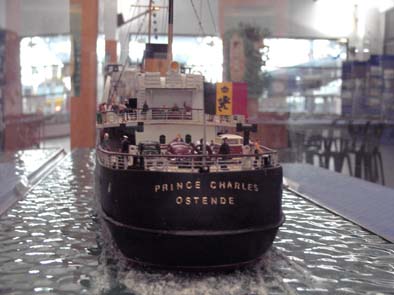
De zoon van Herman ,Dirk, heeft heel wat verhalen van zijn vader kunnen horen. In het bijzonder verhalen over de Prince Charles. Uit respect voor zijn vader, zijn loopbaan en liefde voor zijn beroep, heeft Dirk een prachtige maquette van de Prince Charles gebouwd. Deze maquette was te zien op de tentoonstelling in 2007 en reünie gehouden in 2007 naar aanleiding van tien jaar stopzetten van de RMT. 

Dirk Bonne

Herman Bonne was luggage and ticket collector on the Prince Charles. We asked him if he remembers some stories from his days on board of the Prince Charles. He responded promptly:

Steam engines:

Sometimes the ships funnel produced black particles of soot. It happened the black particles fell on the ladies passengers light clothing and created dirty spots. In that case they could report to the Purser which always had a bottle of cleaner for accidents like that. 

The only efficient connection between the kitchen and the first class restaurant was the engine room. The meals passing there and brought by the waiters stayed perfect on temperature.

The Prince Charles also performed school trips between Ostend and Antwerp. Even then some children could not keep their hands to themselves. Some managed to activate the steam ships flute. After a long period of continuous flute sound, someone from the engine room could eventually silence that flute.

Rough sea -seven in a row:

During a sudden strong movement seven nuns were thrown all together against the ship’s deck.

Deutsche brass band:

After the War Germans wanted to visit England. A visit in a musical way.
The band played many cheerful notes on departure but after an hour of roughs sea the music was stopped as many of the band members had to remove the contents of their stomach. They were doing that unfortunately on the wind side of the ship so the contents was blown back on deck and their clothing. Some luck in the situation for a musician was the fact he found his false teeth back on deck.

Manoeuvres:

During docking in the port of Dover, the Captain was looking so focussed to the quay, he did not see that the small cabin from the control post on the side of the bridge was hit by a crane and was totally displaced for a few meters.

During the reverse entry of the port Of Ostend, some funny round reed baskets were to be pulled up at the rear mast as a signal. When two distinguished English ladies asked the sailor what those baskets were, he responded promptly: " These are the captains balls"

Herman's son, Dirk has been told many stories about the good old days. Especially the days on the Prince Charles.
Out of respect for his father's career and love for his profession, Dirk has built a magnificent model from the Prince Charles. This model was shown on the reunion held in 2007 as of the 10th anniversary closing down RMT.